
Why Do We Celebrate Oktoberfest?
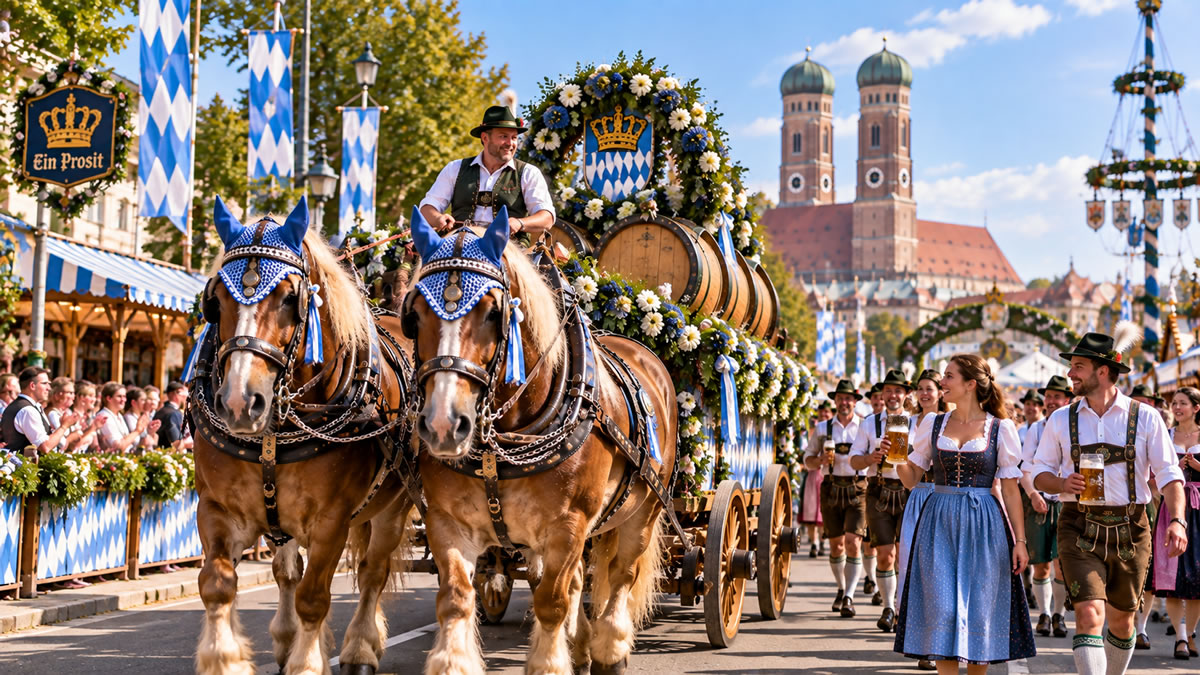
Every year, Oktoberfest celebrations bring together beer, Bavarian food, traditional clothing, music and plenty of cries of "Prost!"
But why do we celebrate Oktoberfest in the first place?
The story begins more than 200 years ago with a royal wedding in Munich. What started as a public celebration for a Bavarian prince and princess became an annual tradition, eventually developing into one of the world's largest festivals.
Along the way, Oktoberfest moved mostly into September, beer halls replaced horse racing as the main attraction and traditions developed that are now recreated at celebrations around the world — including here in Australia.
So, grab a stein and settle in. Here's how Oktoberfest began.
It All Started With a Royal Wedding
The first Oktoberfest was held in 1810 to celebrate the marriage of Crown Prince Ludwig of Bavaria — who would later become King Ludwig I — and Princess Therese of Saxe-Hildburghausen.
The couple married on 12 October 1810, and the people of Munich were invited to join the celebrations.
Several days of festivities culminated in horse races on 17 October on fields outside the city gates.
The celebration proved so popular that the horse races were held again the following year.
And then again.
An annual tradition was beginning.
Why Is It Called Oktoberfest?
The name makes considerably more sense when you know the original celebration took place in October.
Those first festivities were held during October 1810, and for many years the festival continued to take place predominantly during that month.
As Oktoberfest developed, however, organisers gradually moved its starting date earlier.
Munich's September weather was generally warmer and the days longer, providing better conditions for an outdoor festival.
Modern Oktoberfest therefore begins in September and continues into early October.
So despite the name, most of Oktoberfest actually happens before October arrives.
What Is the Theresienwiese?
There's another piece of that original royal wedding still hiding in plain sight.
The Munich festival continues to be held on the Theresienwiese, a large open area named in honour of Princess Therese.
Locals often shorten the name to simply "Wiesn" — a word you'll frequently encounter when reading about the Munich Oktoberfest.
More than two centuries after that first celebration, Oktoberfest is still taking place on essentially the same site.
That's a pretty impressive wedding legacy.
From Horse Races to Festival Grounds
The earliest Oktoberfest would look quite different from the enormous festival people know today.
Horse racing played an important role in the early celebrations, and an agricultural show was added soon afterwards.
Over the decades, Oktoberfest continued to evolve.
Food and drink stalls appeared, entertainment expanded and temporary beer stands gradually developed into increasingly elaborate beer halls and tents.
By the late 19th century, the festival was beginning to take on a form more recognisable to modern visitors.
The horse races eventually disappeared, but the beer, food, entertainment and social atmosphere continued to grow.
How Beer Became an Oktoberfest Tradition
Today, it's difficult to imagine Oktoberfest without beer.
Munich's brewing tradition became increasingly important to the festival as beer stands developed into the huge tents for which modern Oktoberfest is famous.
At the official Munich Oktoberfest, the beer served must meet specific requirements and come from Munich breweries.
Beer is traditionally served in a Maß, the familiar one-litre glass beer mug that has become one of the enduring symbols of the festival.
But Oktoberfest isn't simply about drinking beer.
The beer tents are gathering places filled with communal tables, food, music, conversation and celebration. That social side of the experience is a big part of why Oktoberfest has remained so popular.
The Opening of Oktoberfest
Modern Oktoberfest has its own ceremonial beginning.
At noon on the opening Saturday, Munich's mayor taps the first keg and declares:
"O'zapft is!"
The Bavarian expression essentially means "It's tapped!"
Once the first barrel has been opened, Oktoberfest is officially underway and beer can begin flowing throughout the festival.
It's one of the best-known traditions associated with the modern event.
Why Lederhosen and Dirndls?
Traditional Bavarian clothing has also become closely connected with Oktoberfest.
Lederhosen and dirndls weren't originally invented as Oktoberfest costumes. They developed from traditional clothing worn in Bavaria and other Alpine regions.
Over time, wearing traditional dress became increasingly popular at the festival, helping transform lederhosen and dirndls into internationally recognised symbols of Oktoberfest.
Today you'll see them everywhere from Munich's beer tents to Oktoberfest celebrations in Australian pubs, breweries and festival grounds.
You certainly don't have to wear traditional clothing to join the celebration, but dressing up has become part of the fun for many people.
Food Is Just as Important
Beer might receive most of the publicity, but Oktoberfest has always been about more than what's in the glass.
Food is a huge part of the experience.
Traditional favourites include roast chicken, sausages, pretzels, pork dishes, dumplings and other hearty Bavarian specialities.
The communal nature of eating and drinking together is central to the atmosphere.
Oktoberfest is, after all, a festival designed to bring people together.
The Music Behind the Celebration
If you've ever attended an Oktoberfest celebration, you've probably discovered that sitting quietly isn't really the idea.
Traditional brass bands and folk music have long been part of the festival atmosphere, while modern beer tents can mix Bavarian favourites with familiar party songs.
One tune has become particularly synonymous with Oktoberfest: "Ein Prosit."
When it plays, festival-goers raise their glasses for a toast before drinking together.
You might hear it more than once.
Quite a lot more than once.
It's another example of the communal traditions that make Oktoberfest feel different from simply spending an afternoon at the pub.
Has Oktoberfest Happened Every Year?
Not quite.
Despite its long history, Munich's Oktoberfest has been cancelled on a number of occasions.
Wars, disease outbreaks and other major events have interrupted the festival at different points during its history.
More recently, Oktoberfest was cancelled in 2020 and 2021 during the COVID-19 pandemic.
Those interruptions mean the number of Oktoberfest celebrations doesn't exactly match the number of years since 1810.
Nevertheless, the tradition has repeatedly returned.
How Did Oktoberfest Become a Worldwide Celebration?
As Oktoberfest grew in Munich, its distinctive combination of Bavarian culture, food, beer, music and communal celebration became known around the world.
German communities overseas helped carry those traditions with them, while cities, breweries, pubs and event organisers developed Oktoberfest celebrations of their own.
Some attempt to recreate elements of the Munich experience as faithfully as possible.
Others put a distinctly local spin on it.
Today, you'll find Oktoberfest celebrations across Europe, the Americas, Asia and Australia.
They vary enormously in size and authenticity, but most borrow at least a few of the traditions that developed in Bavaria.
Oktoberfest in Australia
Australia has enthusiastically embraced Oktoberfest.
Celebrations range from events organised by German clubs and cultural organisations to major festivals, brewery celebrations, beer halls, restaurants and local pubs.
The Australian version can look a little different from Munich.
For starters, spring has arrived by the time Oktoberfest season gets underway here, making outdoor celebrations particularly appealing.
Local events might combine traditional German beer, bratwurst, pretzels, lederhosen and live music with Australian entertainment and hospitality.
Some celebrations lean heavily into Bavarian tradition. Others simply use Oktoberfest as a reason to bring everyone together for a great day out.
Both have become part of the Australian Oktoberfest calendar.
More Than 200 Years of Saying Prost
It's remarkable to think that one of the world's best-known festivals began as a wedding celebration.
The horses may be gone and the festival has changed enormously since 1810, but the basic idea behind Oktoberfest remains surprisingly familiar.
People come together.
They eat, drink, listen to music, dress up, meet friends and celebrate.
That's ultimately why Oktoberfest has survived for more than two centuries — and why a festival that began on a field outside Munich now inspires celebrations on the other side of the world.
So when you raise a stein at an Oktoberfest celebration in Australia, you're joining a tradition that stretches all the way back to a Bavarian royal wedding in 1810.
Prost!